Live It Up
★★★★★★★★★★$0.82 a glass
See Details
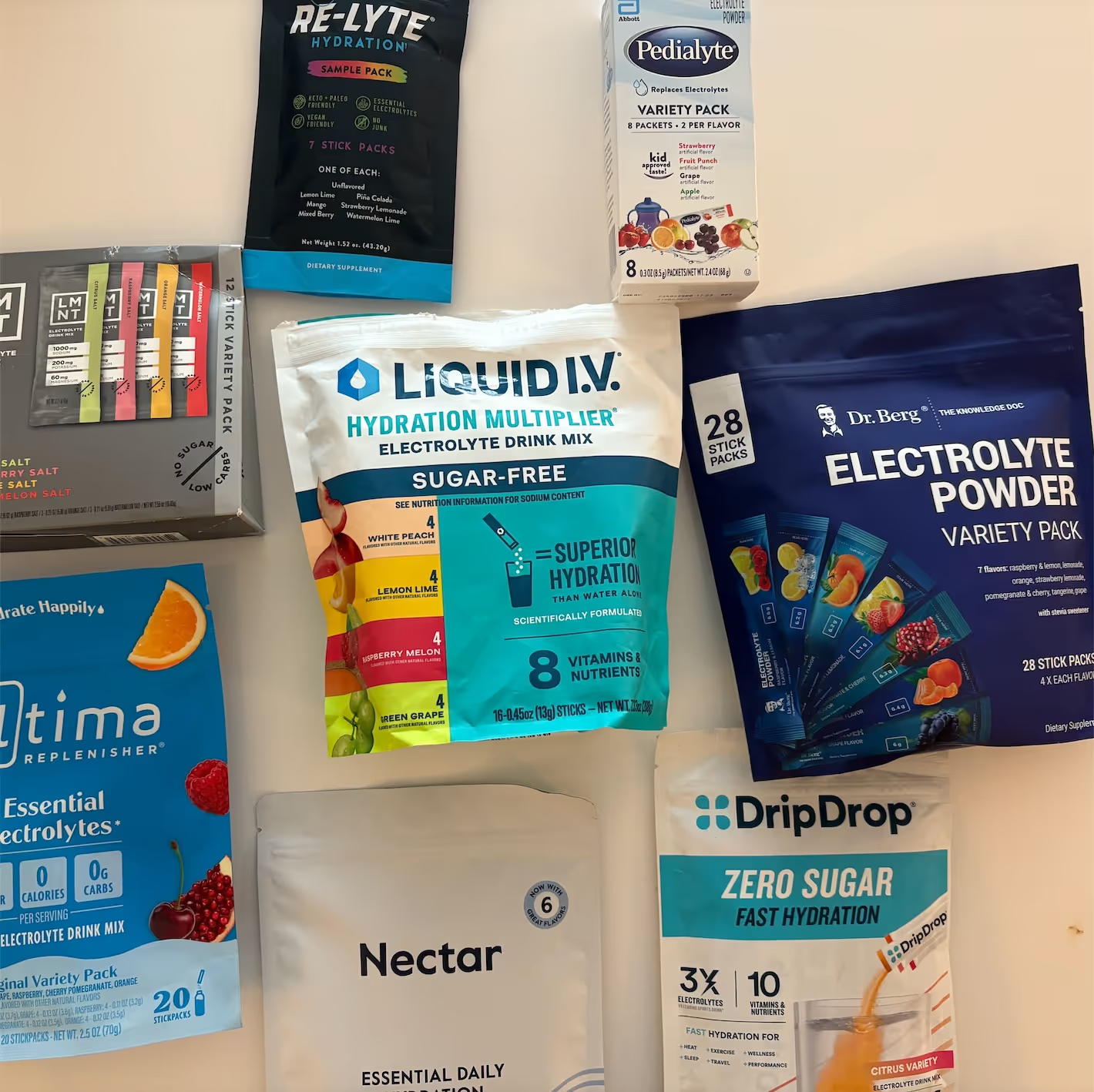
I'm not a doctor and I'm not an athlete. What I am is someone who cares a great deal about nutrition and reads labels for fun. I kept getting cramp in my calves on the stairs and losing whole afternoons to a foggy head, and I got tired of paying $40 for a tub of something on the strength of a nice front-of-pack. So I bought eight of them and drank one a week for two months. Hope this saves you the trouble!
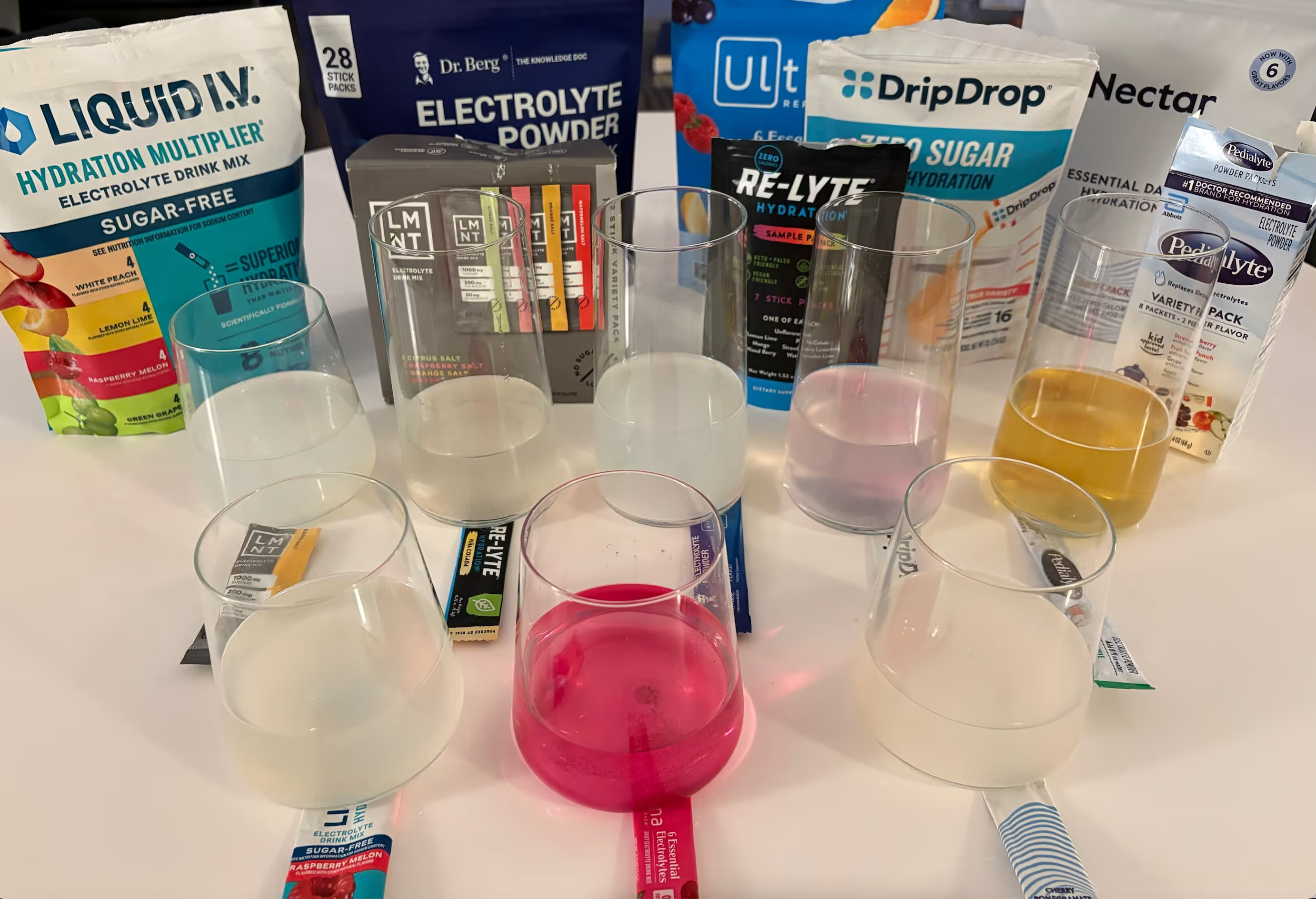
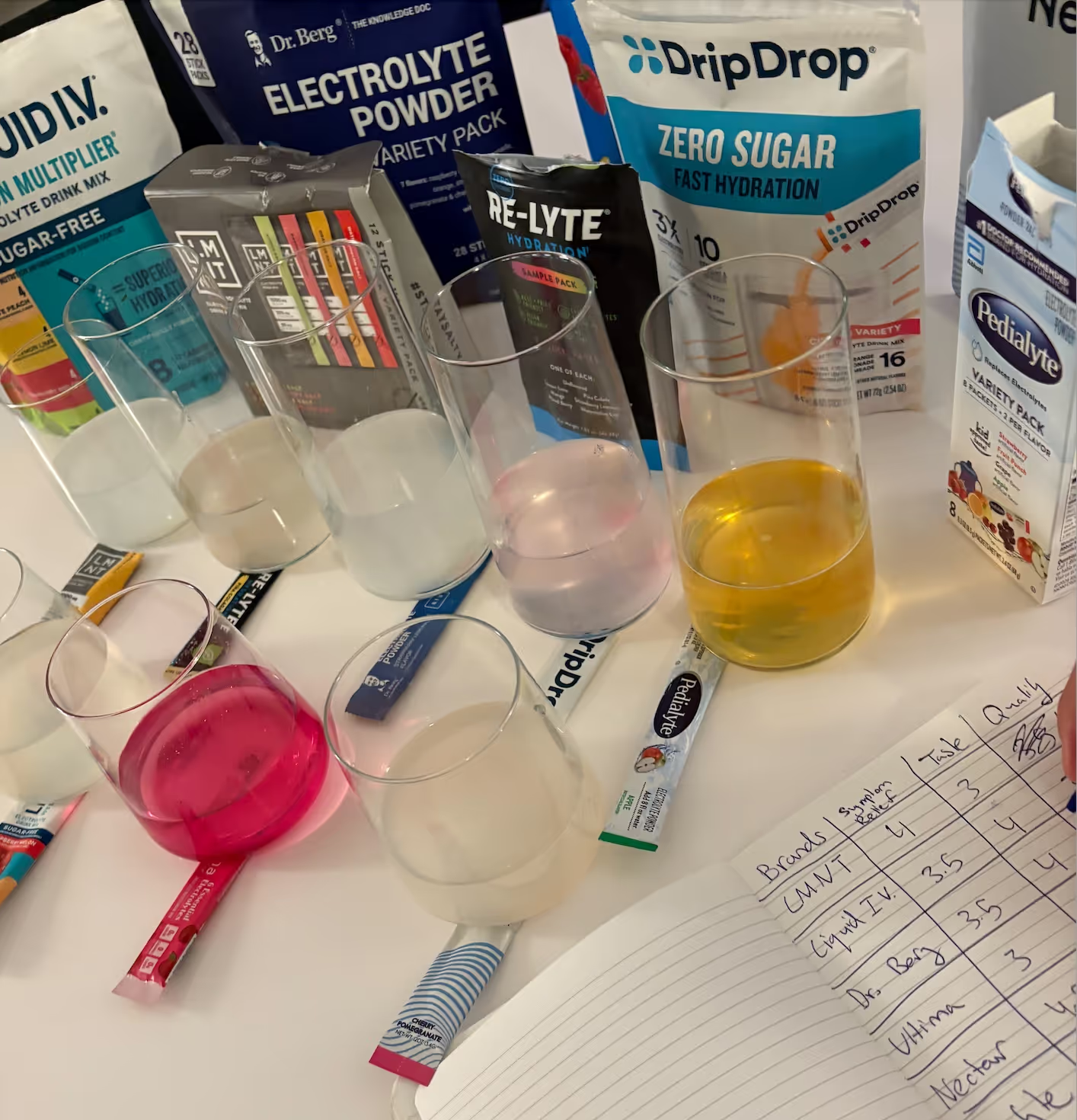
Eight powders tested across mineral profile, taste in plain water, cost per glass, ingredient quality, mixability and label clarity. One scoop each, same glass, same scorecard.
$0.82 a glass
See Details
$1.30 a glass
(See details)
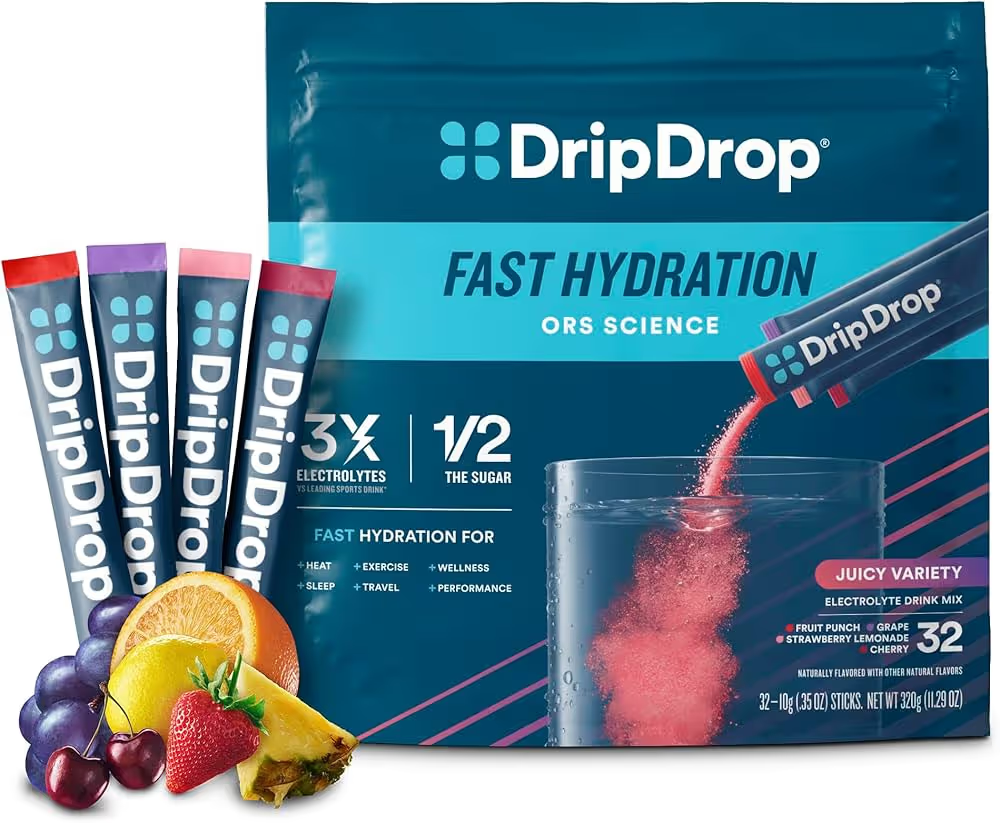
$1.12 a glass
(See details)
$0.84 a glass
(See details)
$1.50 a glass
(See details)
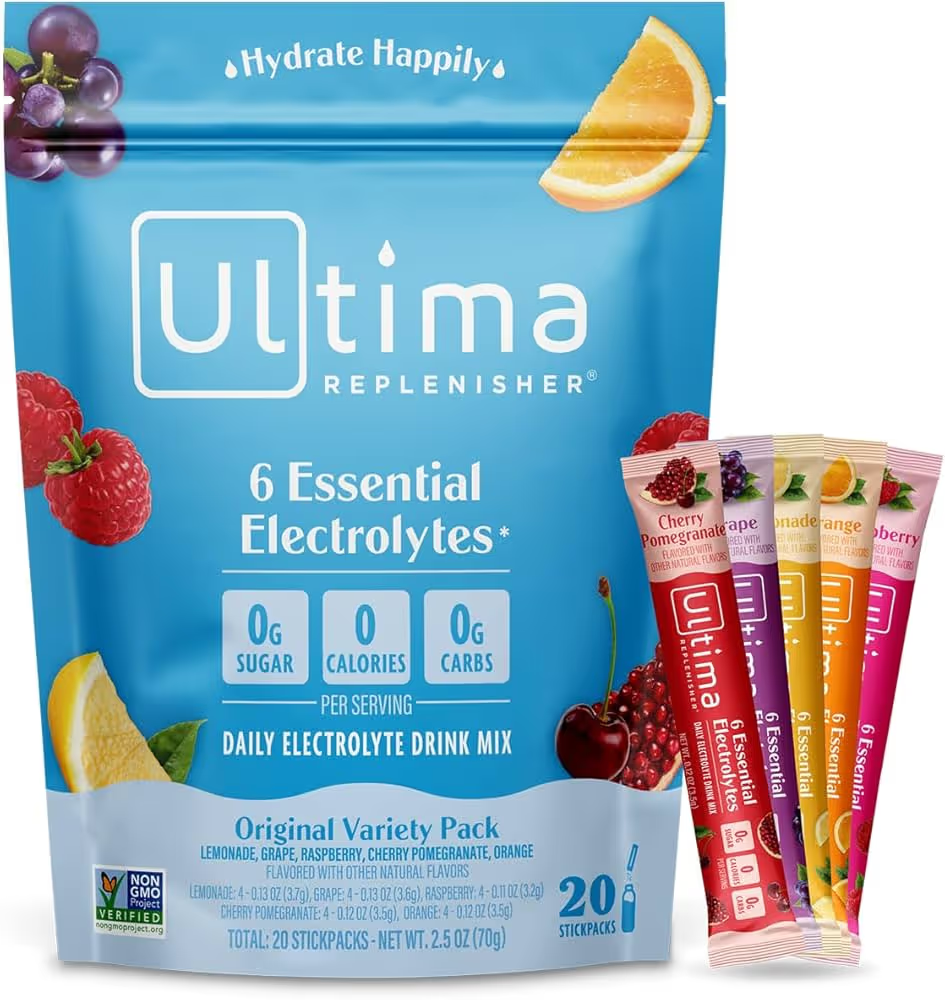
$0.94 a glass
(See details)
$0.75 a glass
(See details)
$1.44 a glass
(See details)The Right Amount of Salt, Not the Most: Everyday powders mostly land between about 300 and 600 mg a glass, and that suits most people. You only need more if you are sweating for hours. The recommended daily limit is 2,300 mg from everything you eat and drink. Our winner uses 22% of it in a glass. LMNT uses 43%.
Minerals That Work Together: Salt alone is not hydration. Potassium works alongside it, and a balance of roughly two parts salt to one part potassium is what most dietitians suggest looking for. Two of the eight here are badly out of balance in opposite directions.
Sugar You Did Not Ask For: Sugar speeds water into you, which is why the sweet ones feel like they work fast. That is deliberate in a rehydration product. But 7, 9 and 11 grams a glass adds up if you drink one every morning.
Something You Will Actually Finish: A powder you drink four times a week beats a better powder you give up on. Half of these I stopped wanting to drink before the week was out, and that told me more than any label did.
Honest Trade-offs: Every powder here has its pros and cons spelled out, including our winner, so you can pick for how you actually live rather than for the marketing.

The honest version of the result is this. If I ran marathons, LMNT would have won. It has nearly twice the salt, 1,000 mg against 510 mg, and that is a real advantage when you are losing that much of it over several hours. But I do not run marathons, and neither do most people. I sit down for most of the day and train four times a week at a moderate pace. Within a fortnight I was watering the LMNT packets down by half.
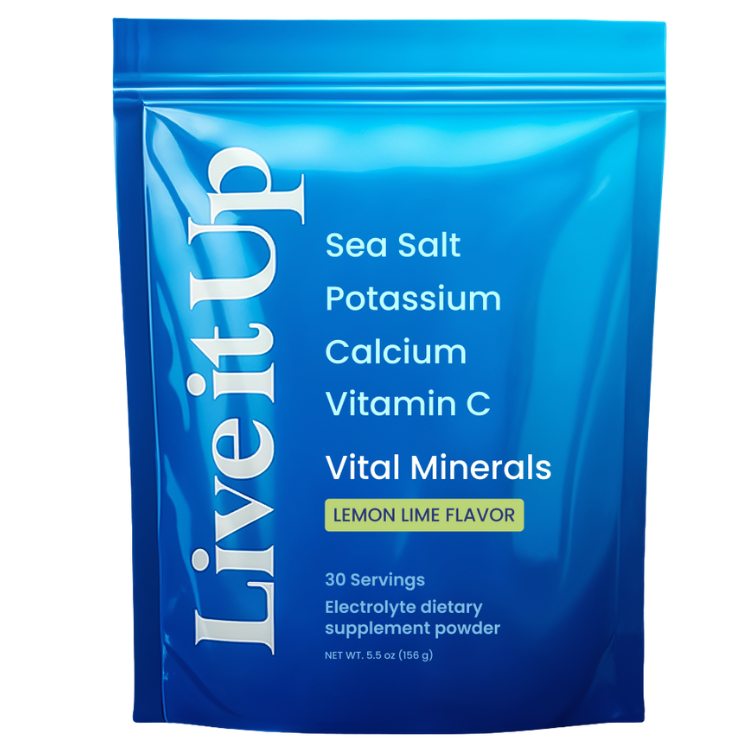
Live It Up was the one that fitted the life I actually have. The sodium comes from sea salt, the flavour from natural flavours and stevia leaf, and there is 68 mg of vitamin C in it without a gram of added sugar. It is also the only one of the eight that ticks every box on the clean-label list further down this page: natural flavours, no artificial sweeteners, no colourings, an unrefined salt and an added vitamin, all at once. Several came close. None of the others managed the full set.
On price, it depends how you buy it. The repeat delivery is where the good rate sits, at roughly 82 cents a glass with free postage, and a single pouch on its own costs a fair bit more. They seem to move their offers around, so it is worth looking at the current price on their own page rather than taking a figure from me. What I can tell you is that it was the only product in the test where I finished the pouch and ordered another without stopping to think about it, and for something you drink every day that ends up being the measurement that matters.

A specialist product, not an everyday one. If you run marathons, cycle for hours, or train in real heat, buy it and ignore our ranking entirely. It is the best thing here for that job. For everyone else, and that includes most people who go to the gym three or four times a week, it is far more salt than you need and the most expensive way to get it.
LMNT adds nothing beyond the minerals, which is a deliberate choice on their part rather than an oversight. It is why it scores bottom of the eight on extras and top on ingredient quality at the same time.

The one I would keep in a suitcase, and the one I would reach for with a stomach bug. Not the one I would want in a glass every morning. The sugar is not a mistake. DripDrop is an oral rehydration solution and the sugar is what makes the science work. But 7 grams a day, every day, is a different decision from 7 grams when you are ill.

A good mixture with an unpleasant texture, and a strange mineral balance: 1,000 mg of potassium against only 40 mg of sodium, which is the least of the eight. If you fast regularly the potassium may be worth putting up with the chalkiness. If you sweat at all, the sodium will not go far. It also loses points for listing its amounts as a blend rather than printing them.

A rescue drink rather than a daily one. Very good after a rough night or a long flight, and it has more added vitamins than anything else here: 73 mg of vitamin C plus four B vitamins. But those vitamins arrive alongside 11 grams of sugar and 45 calories, and it costs the most per glass of the eight. Eleven grams of sugar every single morning is a different decision from eleven grams once.

A good, inexpensive, low-salt drink mix. Right for children and easy days, and underpowered for the problem most people buy electrolytes to solve. At 55 mg of sodium it is the second-lowest of the eight, and the ratio to potassium is inverted compared with what dietitians usually suggest. The low salt that counted against it here is a genuine advantage if you are buying for a child.

A good product I could not make myself finish. Its low placing is about whether you can drink it every day, not about quality. The ingredients are as clean as anything on this page and at 75 cents it is the cheapest per glass of the eight. But my father described it as "like licking a rock", and it never fully dissolved no matter what I did. If you train hard in the heat, it is a fair choice.

Keep a box in the cupboard for when someone has the flu. It was never trying to be a daily hydration drink, and judging it as one is not entirely fair to it. For the job it was actually designed for it is the most proven thing on this page.
What pushed it to last place was the price. I had assumed Pedialyte was the cheap option, and it is not: the eight-packet variety box works out at $1.44 a glass, which is more than everything here except Liquid I.V. and nearly twice what our winner costs. Add the sugar and the two artificial sweeteners and there is not much of an argument for drinking it daily.
Straight off the labels. Green marks the best figure in a column and red the worst. For salt, both extremes are marked, because too little is as much of a problem as too much. Click a heading to re-order the list.
What electrolytes actually are. They are minerals that dissolve in your body's water and carry a small electrical charge, mainly sodium, potassium, magnesium and calcium. They decide how much of the water you drink your body holds on to, and they keep your muscles and nerves working properly. You lose them in sweat along with the water, which is why drinking more plain water sometimes does not fix the problem.
Adding the total up is not the point. If you add the sodium and potassium together, the eight powders here run from about 305 mg a glass to about 1,210 mg. The biggest total is not the best one. Re-Lyte reaches 1,210 mg with mostly salt, and Dr. Berg reaches a similar figure with almost no salt at all. Ultima has the smallest total and barely any sodium in it. None of those three balances suits an ordinary day.
Two things have to be right at once. The total needs to be in a sensible range, and the split between the two minerals needs to be sensible too. A powder can pass one test and fail the other, and most of these do.
| Product | Sodium | Potassium | Sugar | Calories | Cost per glass | Our score |
|---|---|---|---|---|---|---|
| Live It Up · our winner | 510 mg | 300 mg | 1 g | 10 | $0.82 | 4.9 |
| LMNT | 1,000 mg | 200 mg | 0 g | 0 | $1.30 | 4.3 |
| DripDrop | 330 mg | 185 mg | 7 g | 35 | $1.12 retail | 4.1 |
| Dr. Berg | 40 mg | 1,000 mg | 0 g | 0 | $0.84 | 4.0 |
| Liquid I.V. | 500 mg | 380 mg | 11 g | 45 | $1.50 retail | 3.7 |
| Ultima Replenisher | 55 mg | 250 mg | 0 g | 0 | $0.94 | 3.6 |
| Redmond Re-Lyte | 810 mg | 400 mg | 0 g | 0 | $0.75 retail | 3.4 |
| Pedialyte | 370 mg | 280 mg | 9 g | 30 | $1.44 retail | 3.2 |
All figures are per serving, made up as the label tells you to. Prices are what you pay on a repeat delivery, and where a brand gives a discount for ordering more than one pack we have used that. retail means we could only confirm the ordinary shelf price, so the real figure may be a little lower. Figures for Live It Up are from the Lemon Lime label.
Sodium. This is salt. Everyday powders mostly land between about 300 and 600 mg a glass, and that suits most people. You only need more if you are sweating for hours. The recommended limit is 2,300 mg a day from everything you eat and drink. Our winner uses 22% of that in a glass, and LMNT uses 43%.
Potassium. The other mineral you lose in real quantity when you sweat, and the one that works alongside the salt. Some powders also add magnesium and calcium, which are not in this table.
Sugar. Sugar helps your body take water in faster, which is why the sweet ones feel as though they work quickly. That is deliberate in a rehydration product. But if you drink one every day, the 7, 9 and 11 grams here add up.
Calories. Mostly a proxy for sugar. Four of the eight have none at all, and our winner has ten. From 30 upwards there is real sugar in the packet.
Cost per glass. What one glass costs you at the repeat-delivery price. Anything under a dollar is good value if the minerals stack up.
Minerals are not the whole story. Two of these eight are sweetened with artificial sweeteners and coloured with dyes, three use an unrefined salt rather than plain refined salt, and four add vitamins on top. Straight off the ingredients lists.
| Product | Natural flavours only | No artificial sweeteners | No colourings | Unrefined salt | Added vitamins | Also added |
|---|---|---|---|---|---|---|
| Live It Up | ✓ | ✓ | ✓ | ✓ | ✓ | Vitamin C, coconut water |
| LMNT | ✓ | ✓ | ✓ | ✗ | ✗ | — |
| DripDrop | ✗ | ✗ | ✗ | ✗ | ✓ | Vitamin C, zinc |
| Dr. Berg | ✓ | ✓ | ✓ | ✓ | ✗ | Trace minerals |
| Liquid I.V. | ✓ | ✓ | ✓ | ✗ | ✓ | Vitamin C, 4 B vitamins |
| Ultima Replenisher | ✓ | ✓ | ✓ | ✗ | ✓ | Vitamin C, zinc |
| Pedialyte | ✗ | ✗ | ✗ | ✗ | ✗ | — |
| Redmond Re-Lyte | ✓ | ✓ | ✓ | ✓ | ✗ | 60+ trace minerals |
Only one product ticks all five. Live It Up is the only one of the eight that manages natural flavours, no artificial sweeteners, no colourings, an unrefined salt and an added vitamin all at once. Dr. Berg and Re-Lyte get four of the five. None of the others manages the full set.
Artificial sweeteners and colourings. DripDrop and Pedialyte both use sucralose and acesulfame potassium to sweeten, and both add colouring. Neither is unsafe, and Pedialyte in particular was built for a chemist's shelf. But if you are drinking something every morning, it is reasonable to want neither in it.
Sea salt and other unrefined salts. Three of the eight use one: Live It Up uses sea salt, Dr. Berg pink Himalayan, and Re-Lyte Redmond's Real Salt. These carry small amounts of other minerals that refined salt has had stripped out. To be straight with you, the nutritional difference is small. Salt is salt as far as the sodium goes. It is a question of how processed you want your ingredients, and plenty of people care about that.
Added vitamins. Four add something beyond the minerals. Liquid I.V. adds the most, with vitamin C and four B vitamins, though it comes with 11 grams of sugar. Live It Up adds 68 mg of vitamin C, 76% of a day's worth, with no sugar to go with it.
For most people on an ordinary day, water is enough. Electrolytes start to matter when you are losing minerals faster than you replace them: long or hot workouts, heavy sweating, a low-carb diet, or recovering from illness. Water replaces the fluid you lost. It does not replace the salt and minerals that went with it.
If you already drink plenty of water and still feel below par, a powder is worth trying for a fortnight. If the real problem is that you forget to drink, a powder mostly just makes water more appealing. That is a genuine benefit, but a different one.
Because more salt is not automatically better, and past a point it is worse. Around 250 to 500 mg per glass suits most people on most days. LMNT has 1,000 mg in a single glass, which is 43% of the recommended daily limit of 2,300 mg before you have eaten a thing. That is nearly double our winner, which has 510 mg, or 22% of the limit.
LMNT's amount makes sense for a marathon runner, or somebody who has been cycling in the heat for three hours. It does not make sense for a gym session, a walk, or a day at a desk.
Six of the eight use it. It is a sweetener made from a plant, with no calories, and the usual complaint is the taste rather than anything to do with safety. Some people notice a bitter or metallic finish, and how noticeable it is varies a lot between products. Live It Up and DripDrop hid it best. Ultima was the most obvious to us.
Live It Up. A moderate 510 mg of salt, no added sugar, vitamin C, and pleasant enough to drink every day without needing a reason. It came to 82 cents a glass on a repeat delivery.
LMNT, without hesitation. 1,000 mg of salt per packet is far too much for a desk day and exactly right for a marathon or a long ride in July. Buy it and ignore our ranking, which is weighted for everyday use.
DripDrop. It is built on the same principle as rehydration salts and dissolves in seconds in a paper cup. Worth keeping a few packets in a bag. The 7 grams of sugar that count against it for daily drinking are part of why it works when you are ill.
Ultima Replenisher. No sugar, very little salt, gentle on the stomach and inexpensive. The low salt that counted against it in our test is a good thing here.
These ranged from 75 cents to $1.50 a glass. Anything under a dollar is good value if the minerals stack up, and our winner comes in at 82 cents. The two dearest, Liquid I.V. at $1.50 and Pedialyte at $1.44, are also the two with the most sugar in them.
One thing to watch: with most of these brands, including our winner, the good price depends on setting up a repeat delivery, and sometimes on ordering more than one pack at a time. Repeat deliveries can be cancelled whenever you like, but they are a recurring payment, so only set one up if you are comfortable with that.
One weighted scorecard applied identically to all eight: mineral profile 25%, taste 20%, cost 15%, ingredient quality 15%, mixability 10%, label clarity 10%, extras 5%. Every product's breakdown across all seven is shown on its card above, so you can see exactly where a score came from rather than taking the total on trust.
Yes, if you have high blood pressure, kidney trouble, or you have been told to watch your salt. These powders are mostly salt and minerals, and the amounts vary enormously between the products on this page, from 40 mg a glass to 1,000 mg. Take the label to your next appointment and ask. This page is a review, not medical advice.
31 · desk job · four workouts a week
I am not a doctor and I am not an athlete. What I am is someone who cares a great deal about nutrition and about what actually goes into the things I buy. I read labels for fun. I also kept getting cramp in my calves on the stairs and losing whole afternoons to a foggy head, and I got tired of paying $40 for a tub of something on the strength of a nice front-of-pack.
So I bought all eight at full price, drank one a week for eight weeks, and had my dad rate the flavours from unlabelled glasses so my own hopes could not do the scoring for me. He is blunter than any review website. He called Re-Lyte "like licking a rock". This page is the result.
If you want something to drink most days that will not overload you with salt and will not add sugar, start with Live It Up. On a repeat delivery it comes to 82 cents a glass with free postage. If it turns out not to suit you, send it back within 30 days.
This takes you to letsliveitup.com. I earn a commission, and it does not change the price you pay.